Newton SchoolFort Lee, New Jersey

Newton School

Experience the
Ah-Ha moments

Every great discovery starts with a question.

A curious companion for
the next generation of thinkers.

02Mochi

Mochi, the Newton School mascot — a small pink apple character resting a finger against its cheek, thinking.
Ask. Explore. Discover. Fort Lee, NJ — K–12 Mathematics & Physics

SUBJECTS

Mathematics, physics
& test preparation.

01

Mathematics

I see a continuous path from Grade 1 arithmetic to precalculus: numbers become relationships, relationships become functions, and functions lead us to calculus.

  • three beautiful shallow trays each containing four small coral wooden counting spheresGrade 3Multiplication, division, fractions, and the meaning of a unit.
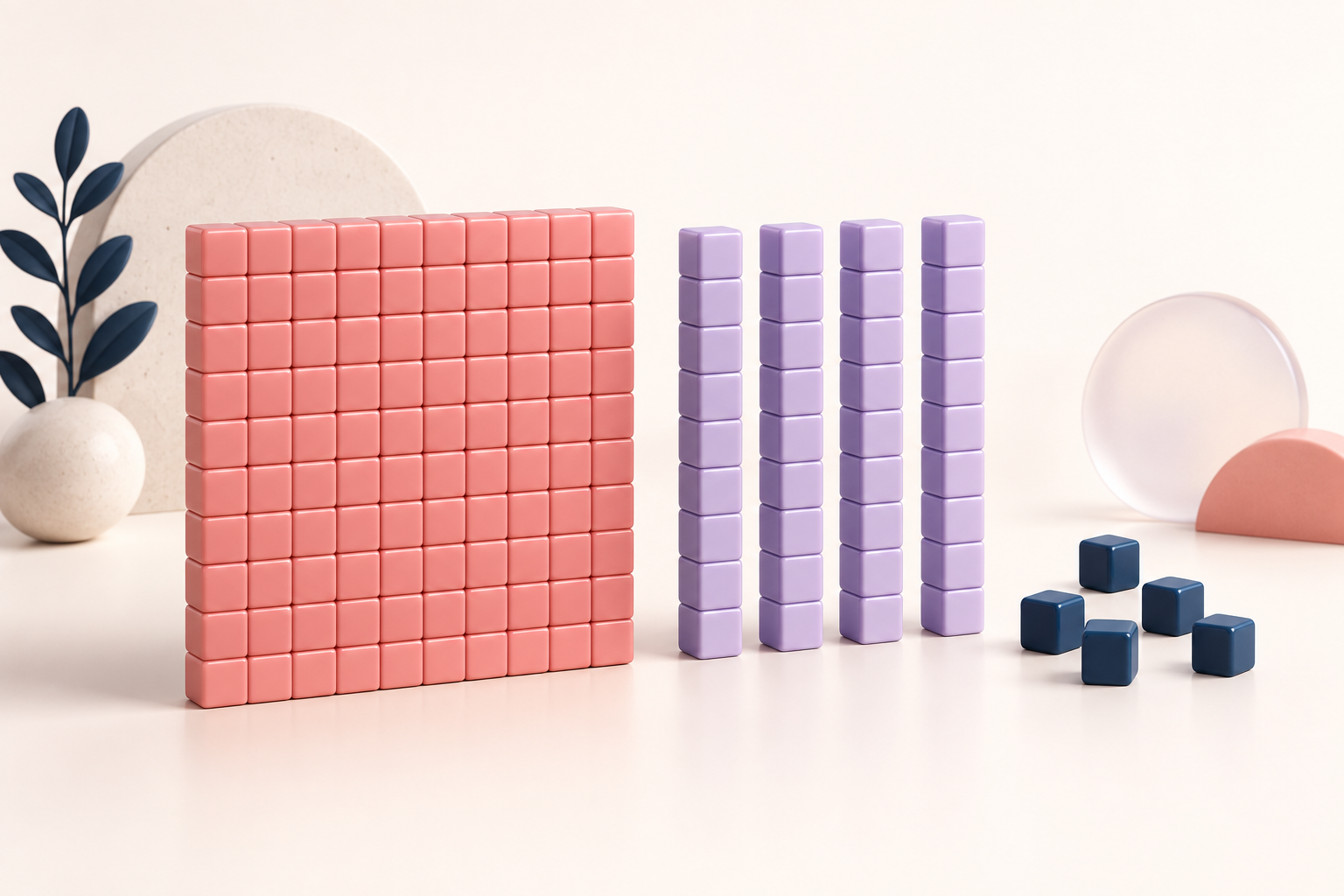
  • elegant base-ten blocks, a hundred flat, tens rods and unit cubes arranged by size, conceptual place value.Grade 4Place value, larger numbers, equivalent fractions, and shapes.
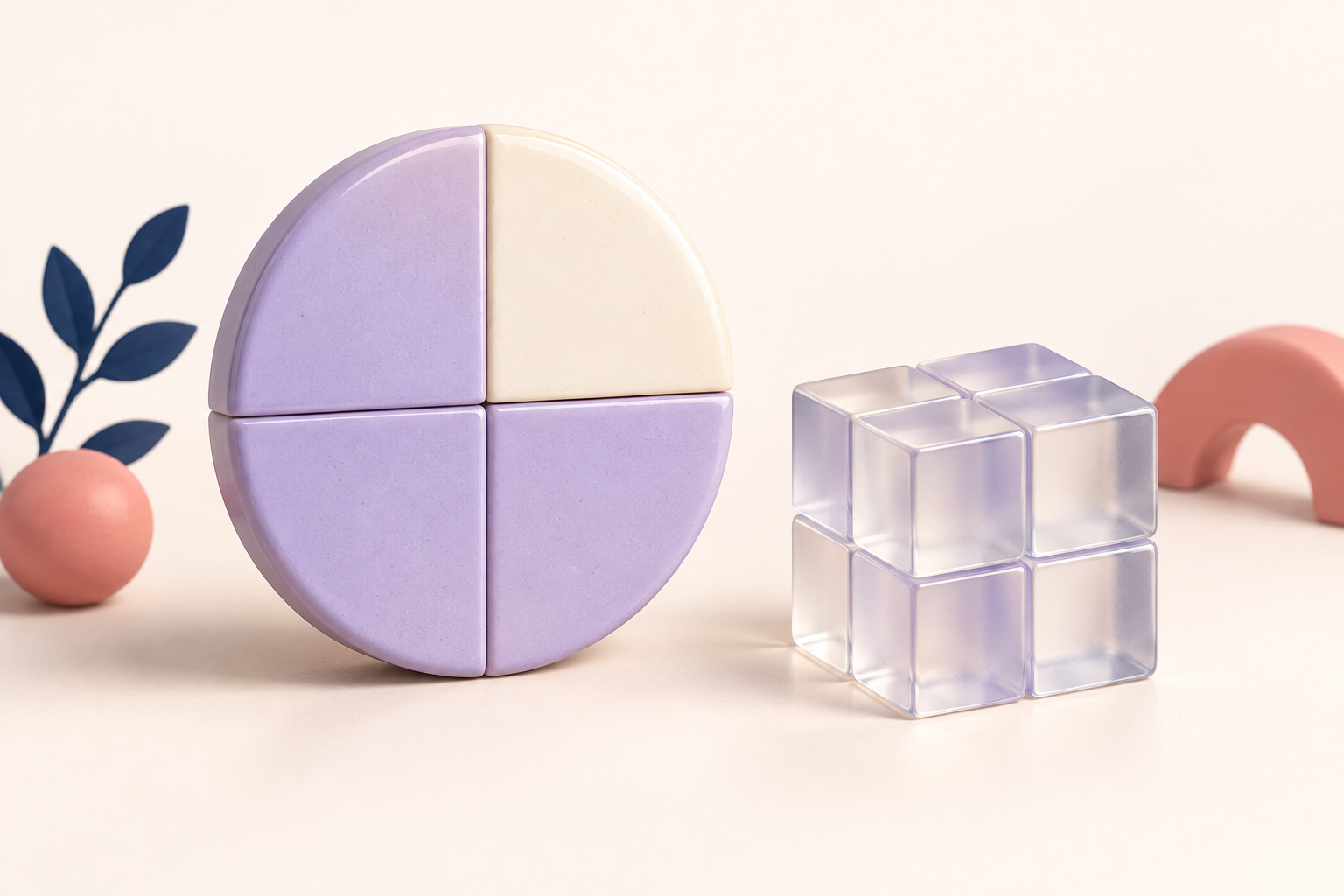
  • a circular ceramic disk divided into four equal sectors, three lavender and one ivory, next to a small transparent cube built of unit cubes, fractions and volume.Grade 5Fraction operations, decimals, volume, and coordinate patterns.
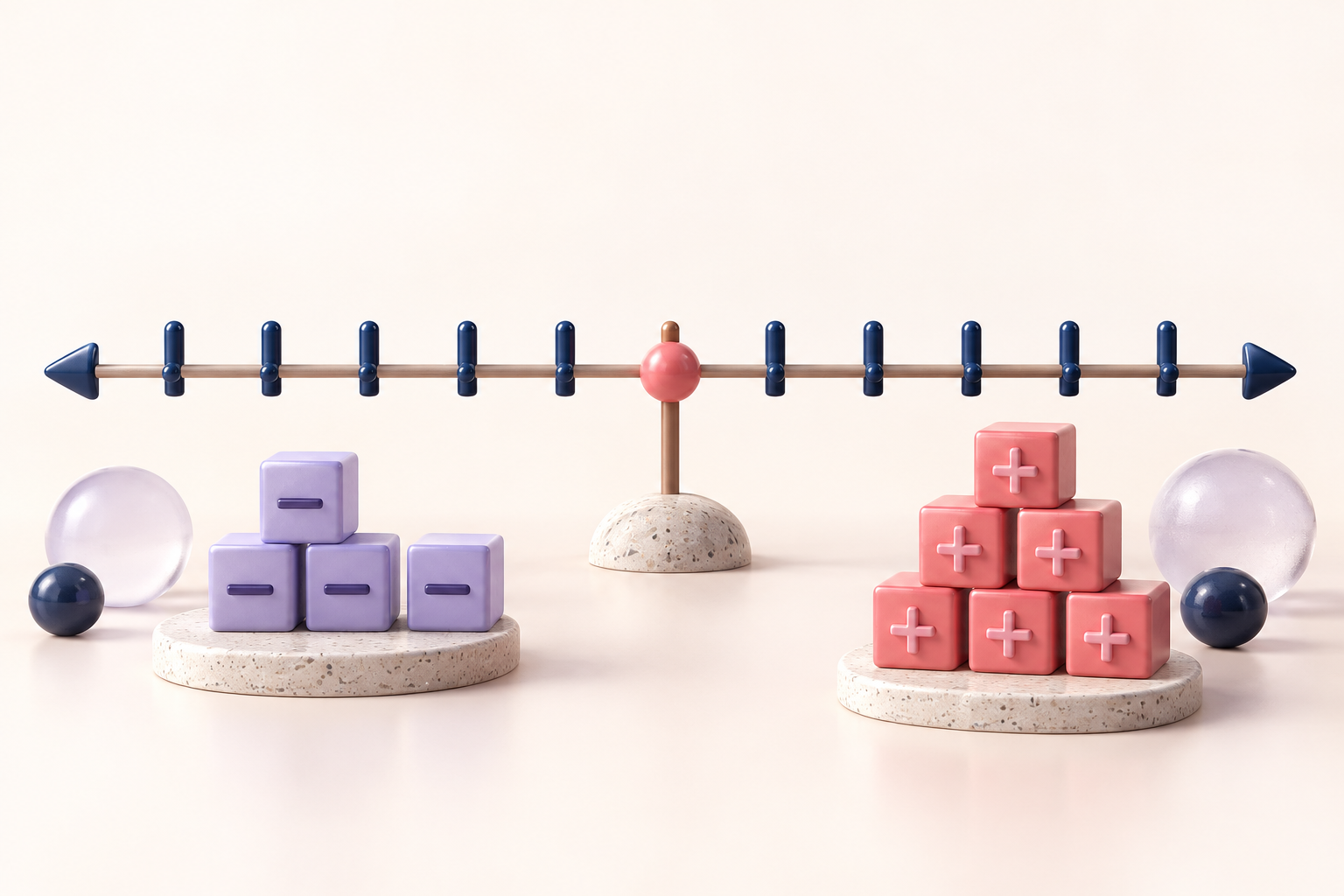
  • a horizontal measuring line with evenly spaced pegs extending on both sides of a central coral zero markerGrade 6Ratios, rates, negative numbers, and expressions—the bridge to algebra.
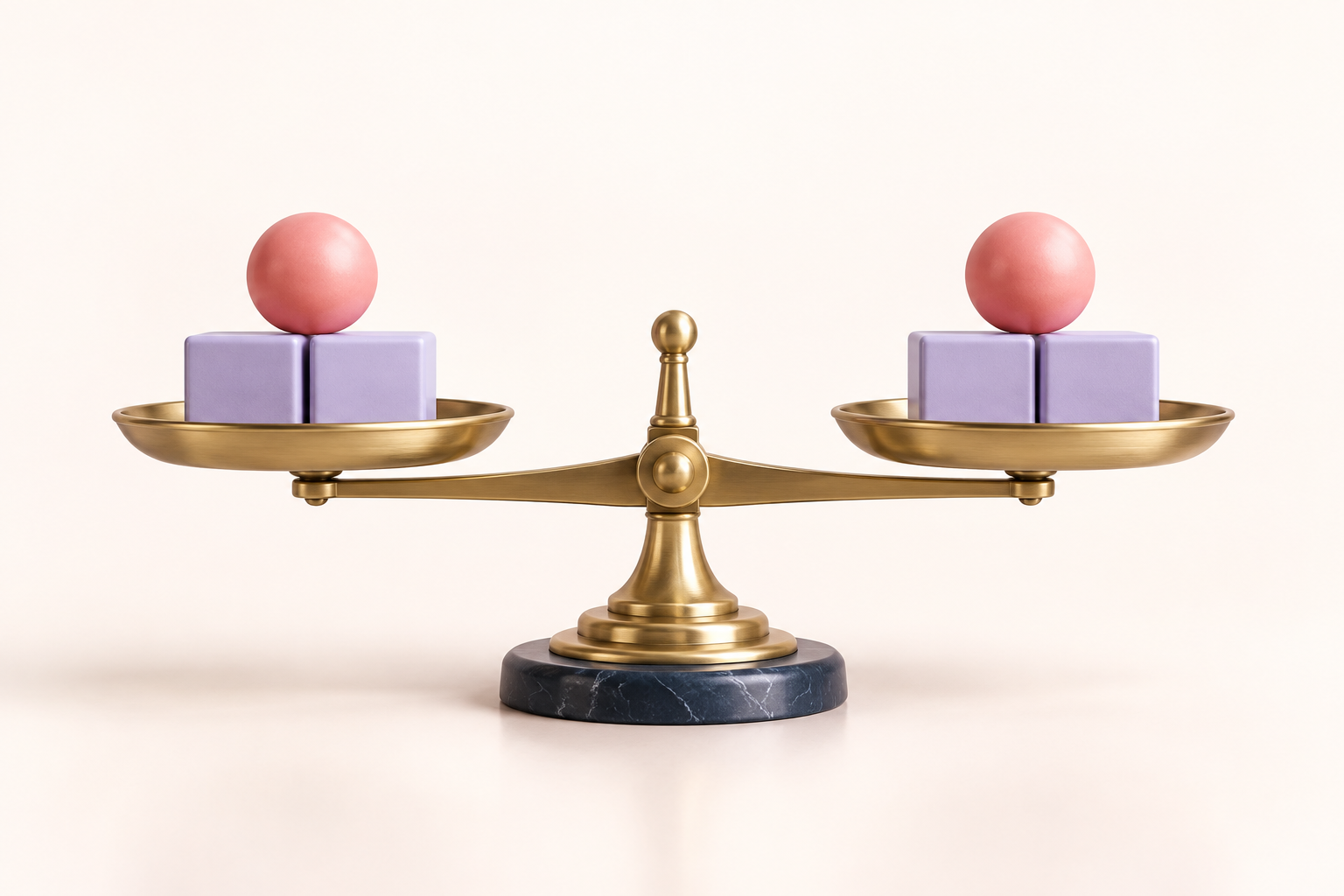
  • a beautifully balanced brass beam scale, matching lavender blocks and coral spheres on its trays, symbolizing equality and an unknown.Pre-AlgebraProportions, equations, and graphs: turning number sense into relationships.
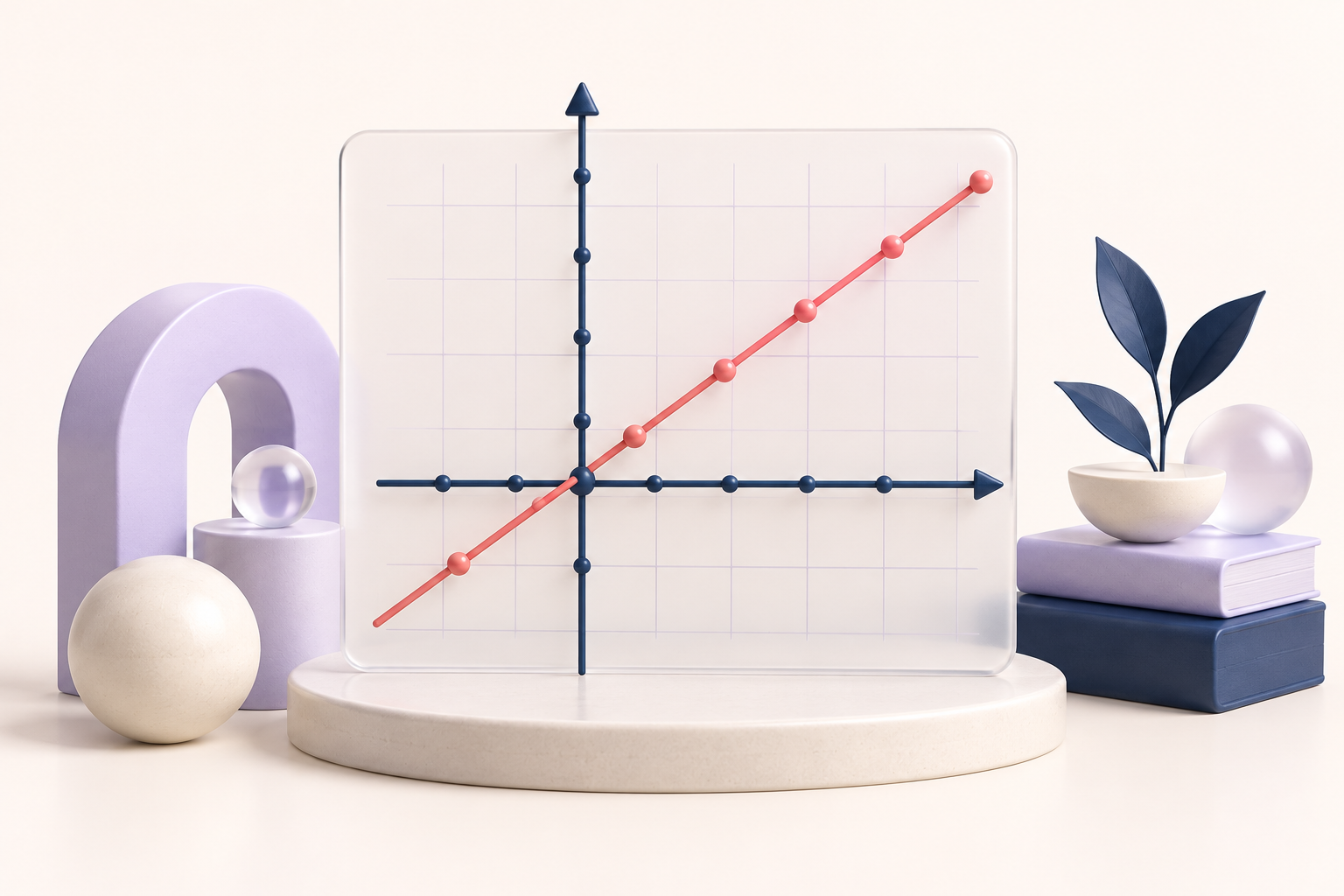
  • elegant three-dimensional coordinate plane with a single rising straight coral line and evenly spaced markers, relating input to output.Algebra IEquations and functions: connect known quantities with unknowns.
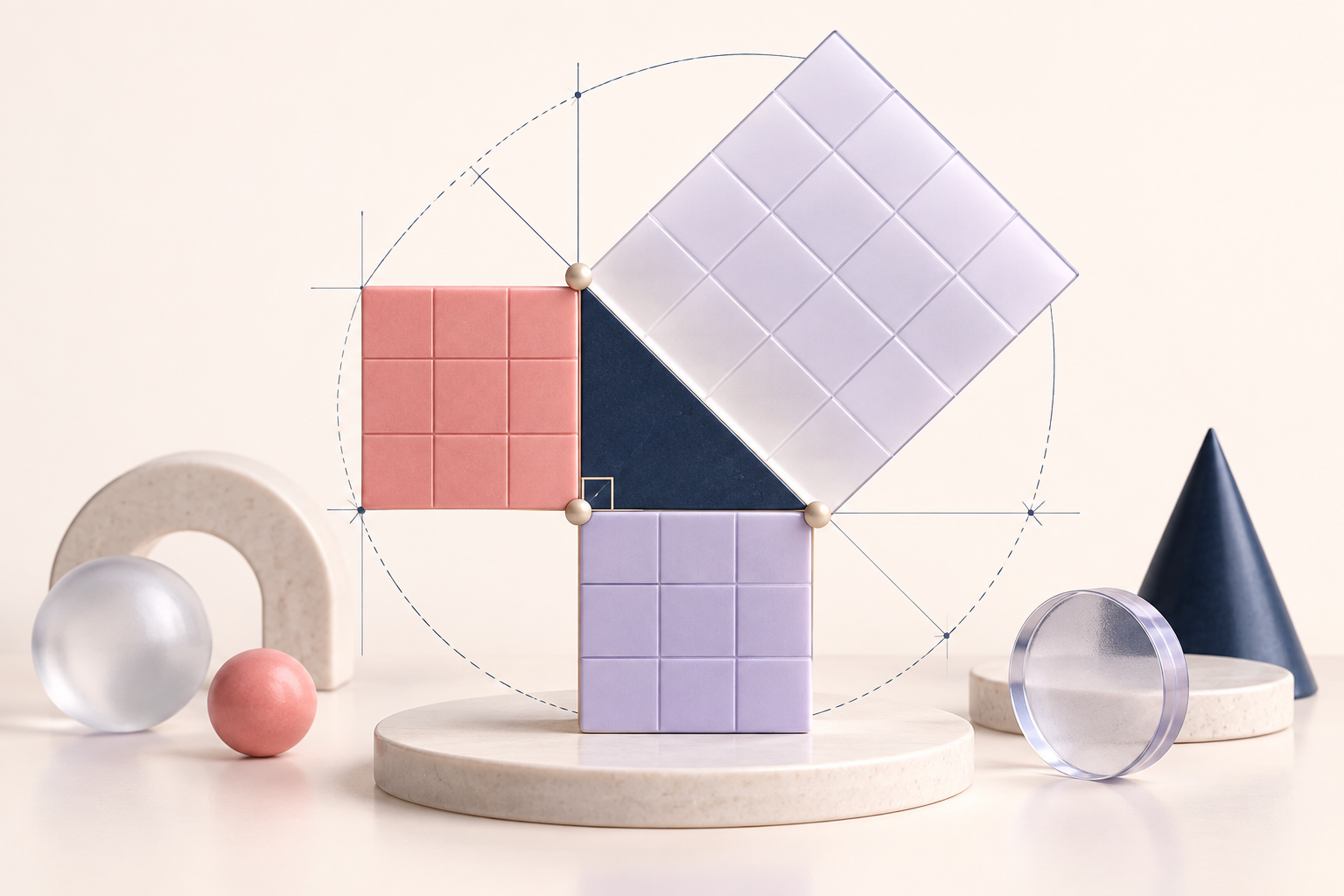
  • a clear right triangle model with three square tiles attached to its sides, fine geometric construction linesGeometryShape, measurement, and proof: explain why a relationship must hold.
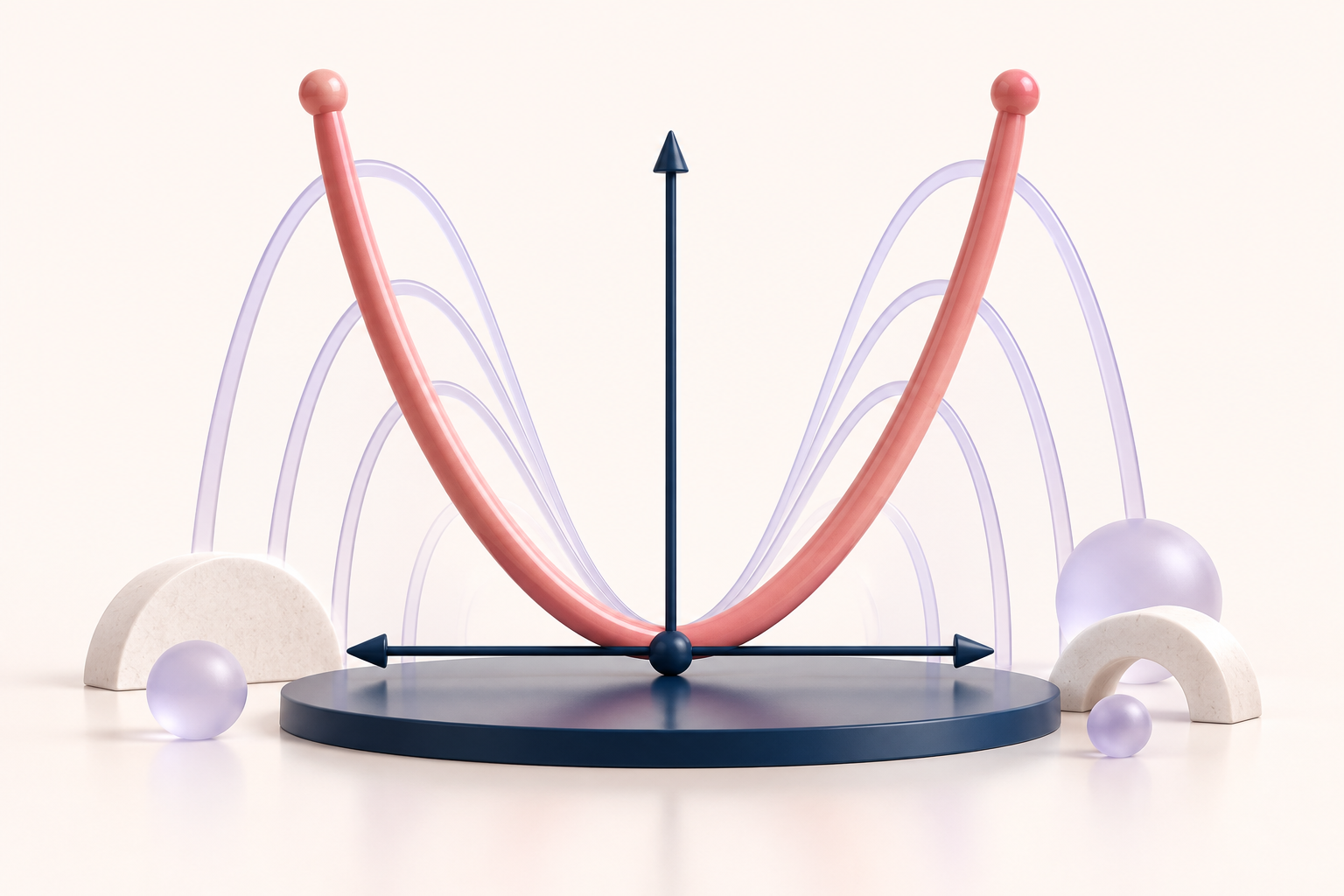
  • a graceful coral parabolic sculptural curve above a restrained navy coordinate plane, with translucent lavender arches suggesting families of functions.Algebra IIPolynomial, exponential, and logarithmic functions: compare how quantities change.
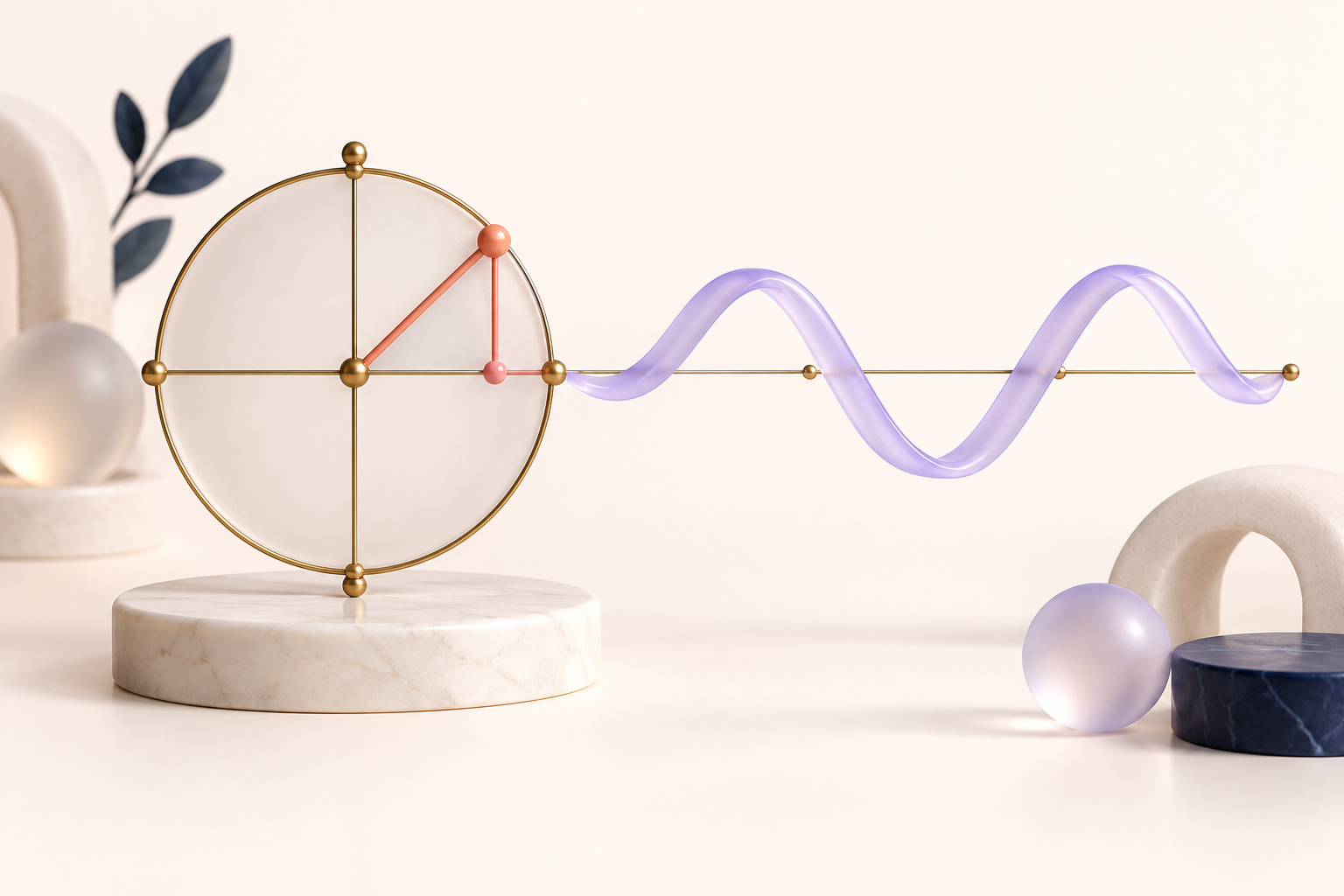
  • a fine brass unit circle and a coral radius with its perpendicular projection, transitioning into a lavender sinusoidal ribbon.PrecalculusFunctions, trigonometry, and limits: prepare to describe continuous change.

  • smooth rising navy curve above a plane, delicate lavender thin slices filling the area underneath and a coral tangent touching it, change and accumulation.AP Calculus AB / BCDerivatives, integrals, and their connection: study change and accumulation.

WHERE THE IDEAS MEET

Change. Accumulation. Calculus.

Derivative — what happens next?

A slope tells us how one quantity changes with another. A derivative gives that rate at a moment, helping us estimate what happens next—locally, while the model holds.

Integral — what does it add up to?

An integral gathers small contributions into a total. Add up a changing velocity over time to find displacement; add up a flow rate to find how much has passed through.

These two ideas connect the mathematics learned along the way—and reach into physics, engineering, economics, biology, and many other fields.
02

Physics

Physics gives mathematics a world to describe. Together with calculus, it lets us imagine motion, forces, and energy—and test those ideas against what actually happens. I see this pairing as one of the most important foundations for understanding and building the future.

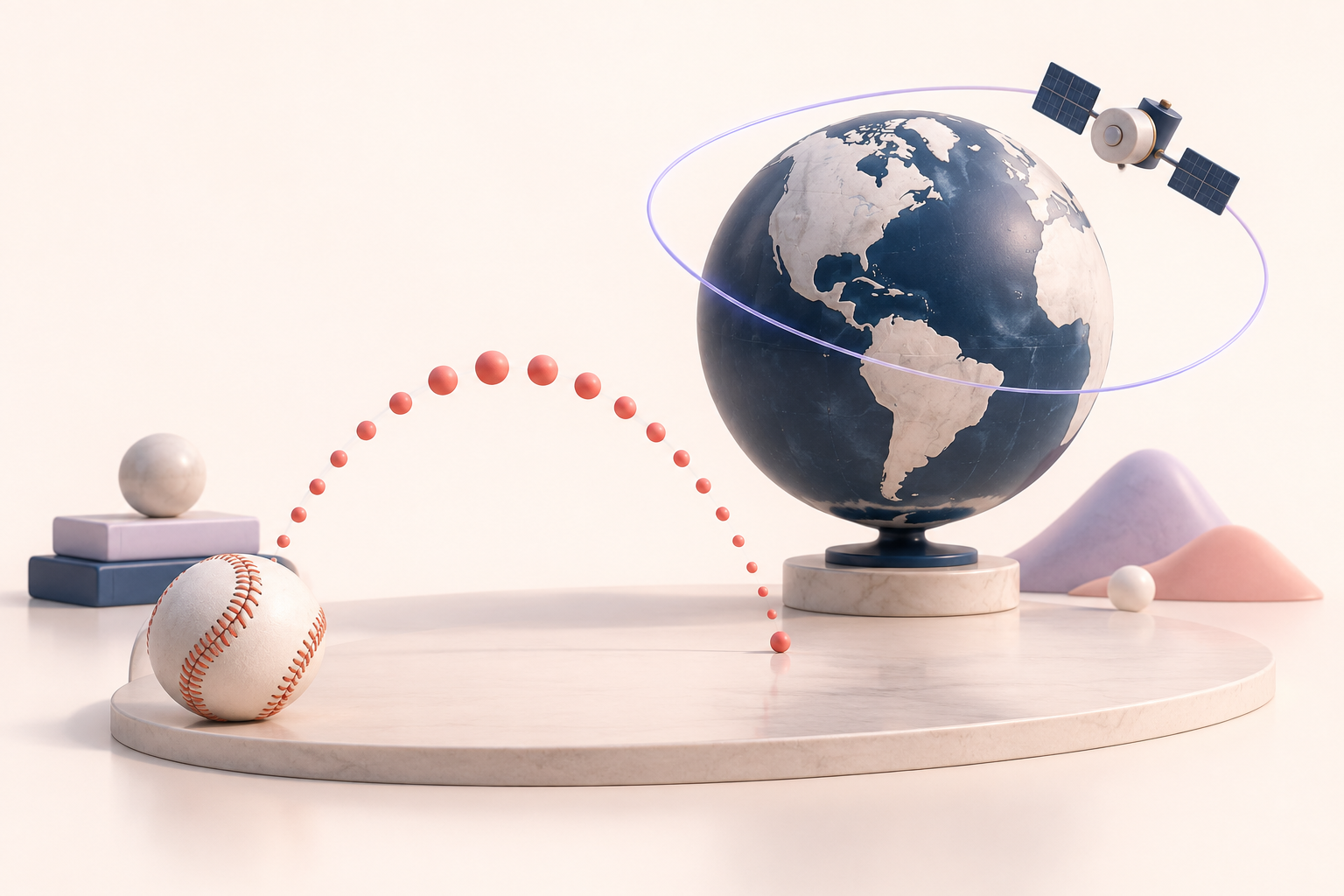
  • a baseball in foreground with a delicate parabolic trajectory, an Earth globe and a small satellite with a circular orbit in background, cohesive scale-model diorama.AP Physics 1 — MechanicsA first encounter with physics through objects we can picture—from a thrown baseball to an orbiting satellite. Vectors describe both size and direction; Newton’s laws and gravity connect motion on Earth with motion in space. We also explore energy, momentum, rotation, oscillations, and fluids.
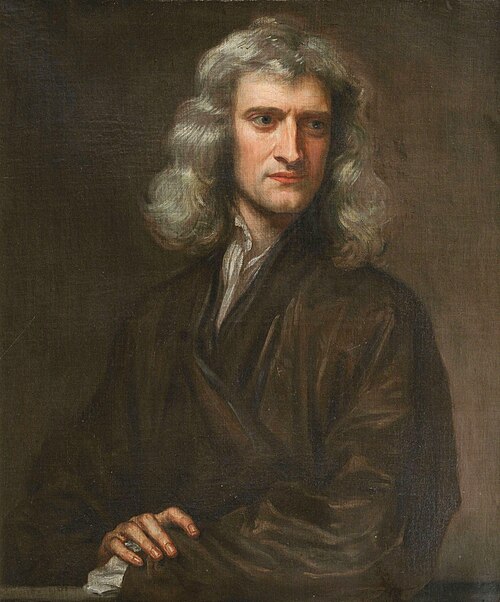
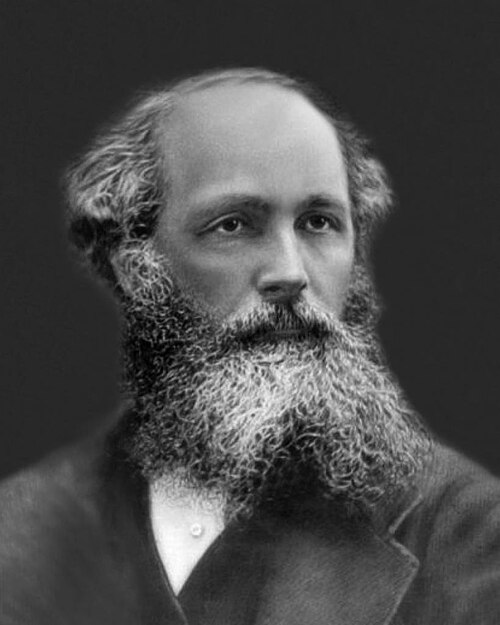
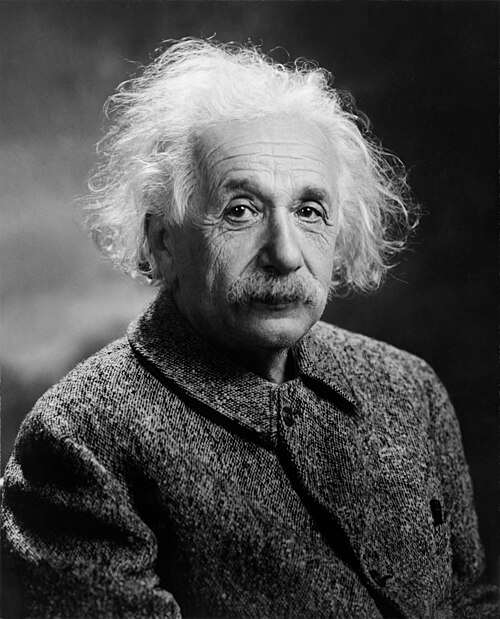
  • small elegant magnet and a glowing light prism with a subtle pastel spectrum, graceful electric and magnetic field curves joining into a light waveAP Physics 2 — Fields, Light & Modern PhysicsExplore invisible electric and magnetic fields, then see how they connect through light. Maxwell and Einstein are guiding figures in our lessons, linking electromagnetism with modern physics. Heat, waves, optics, and atomic and nuclear ideas broaden the picture.
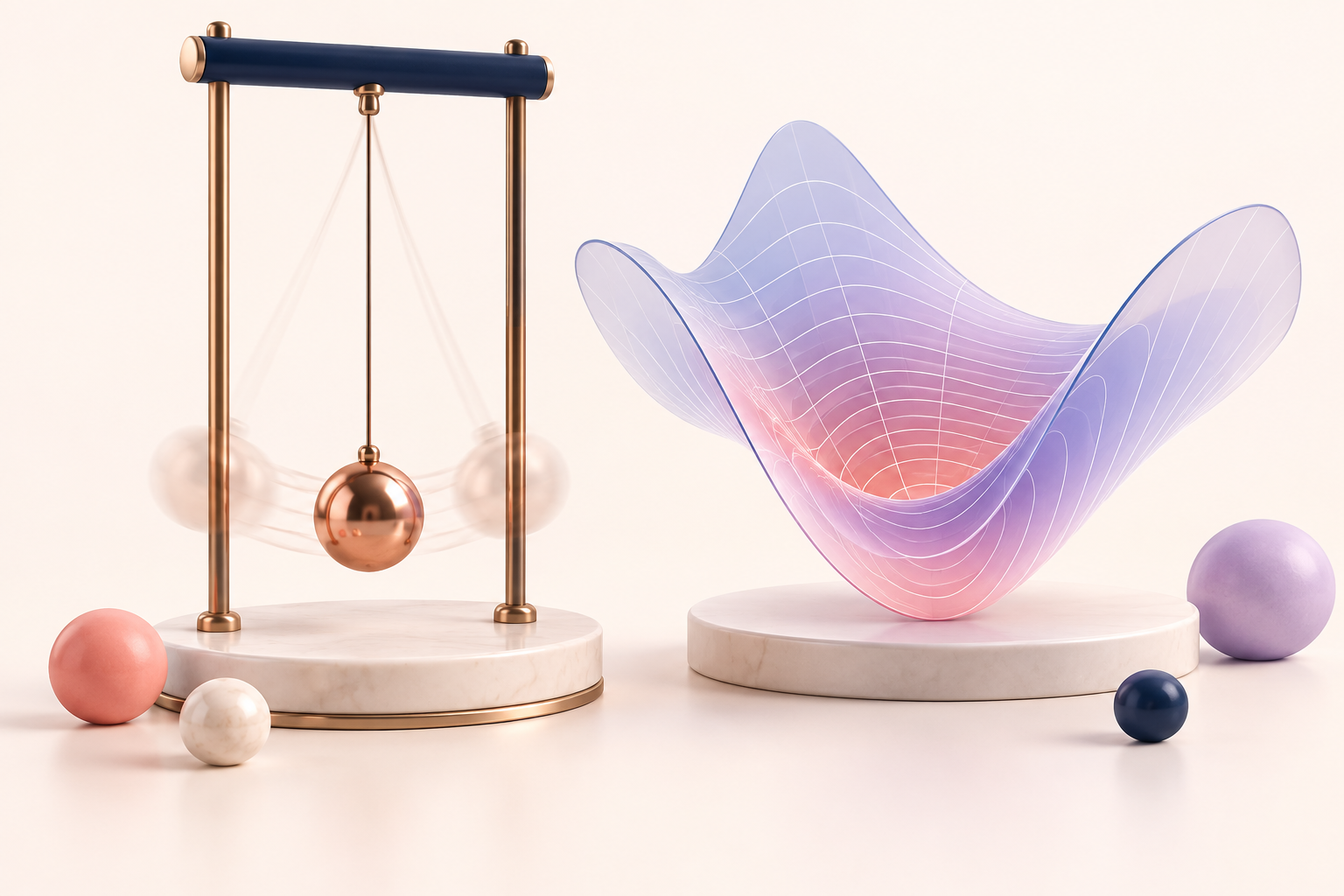
  • a precision pendulum model beside a beautifully curved translucent field surface with fine contour linesAP Physics C — Calculus-Based PhysicsRevisit mechanics and electricity & magnetism with calculus: describe changing motion and fields with greater precision. These are two college-level courses—Mechanics and Electricity & Magnetism—and among the most demanding physics courses offered in high school.

One connection runs through our lessons: a baseball and a satellite both fall under gravity. Follow that idea from Newton’s mechanics to fields and light, then use calculus to express how the physical world changes.

Portrait of Isaac Newton by Godfrey Kneller, 1689
Isaac NewtonMotion & gravity
James Clerk Maxwell
James Clerk MaxwellFields & light
Albert Einstein
Albert EinsteinModern physics
03

SAT / ACT

The goal is fewer mistakes. I teach students to recognize what a question is asking, choose a sound method, and work toward solving it within a minute—leaving time to check.

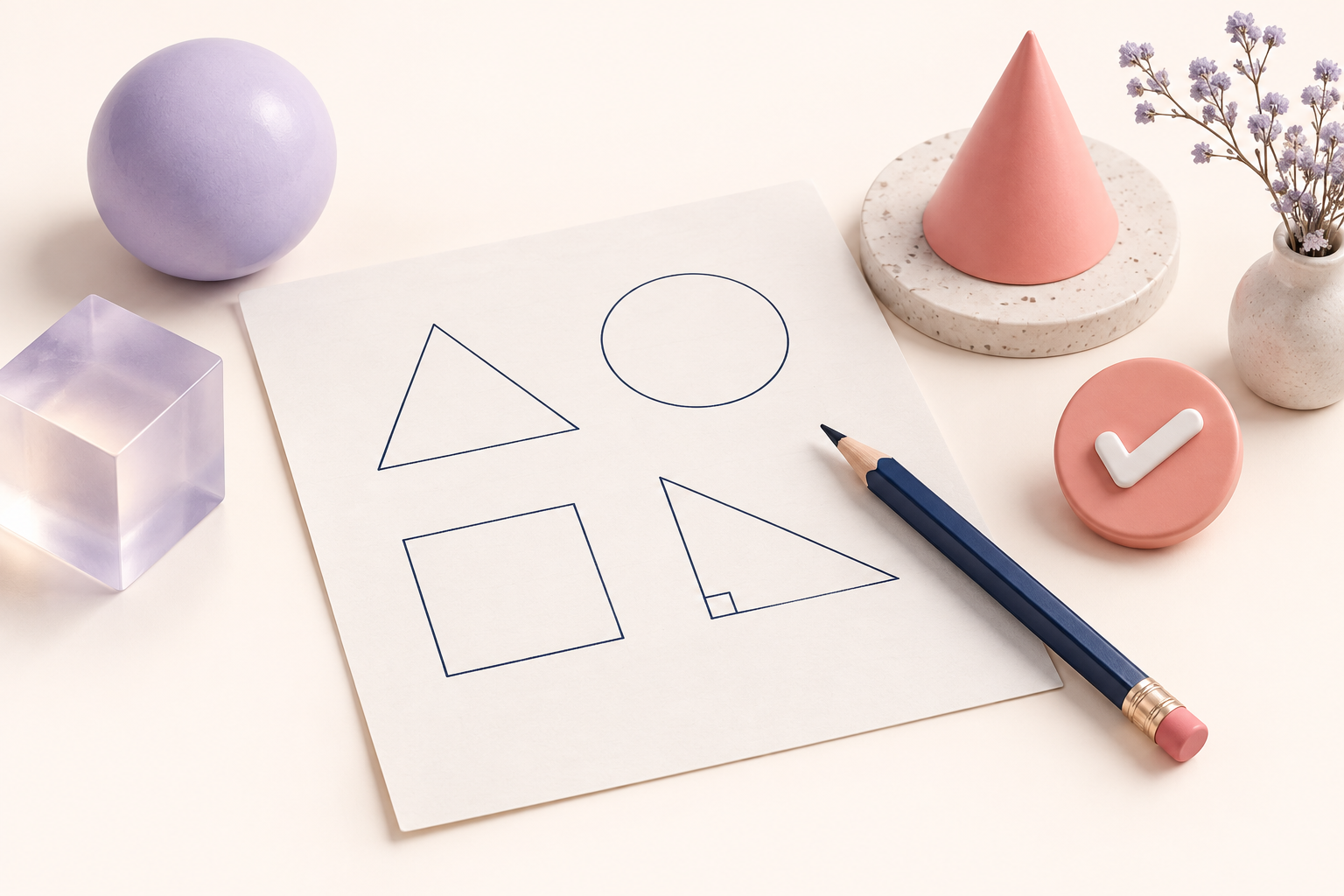
  • a clean worksheet with only simple unlabeled geometry figures, a graphite pencil and a coral check mark token, thoughtful precise problem-solvingSAT MathRead precisely. Identify the conditions and the quantity asked for. Solve with a clear method, then verify the answer.
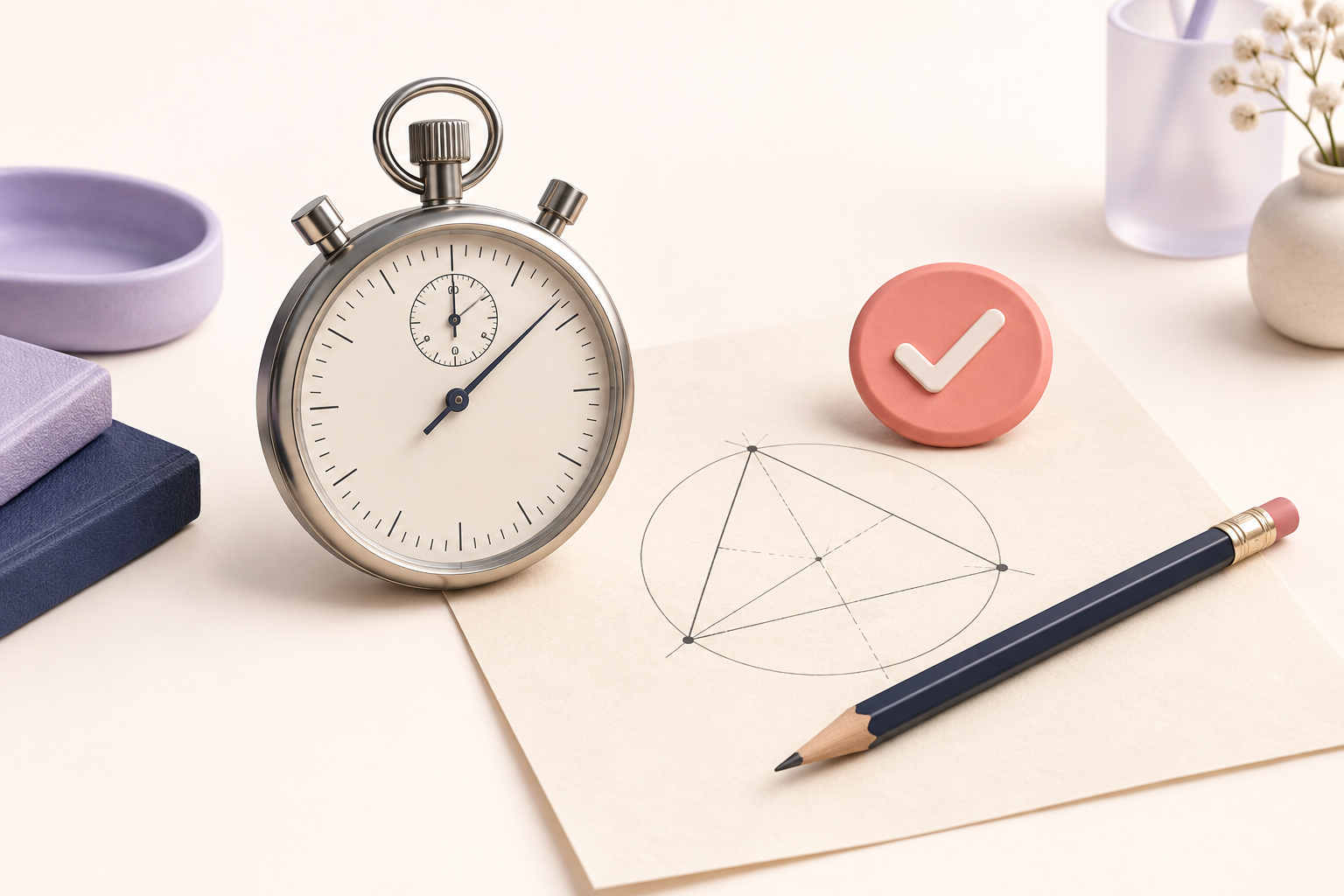
  • a refined analog stopwatch, graphite pencil and simple geometry sketch on ivory paper, a coral verification check token, accuracy and reviewACT MathBuild the same accuracy at pace: understand the question, calculate deliberately, and catch errors before moving on.

READ · REASON · CALCULATE · CHECK

The most important step: check.

My focus is careful reading, a reliable problem-solving method, and—above all—verification. Does the answer satisfy the original conditions? Does it answer the actual question? Do the sign, units, and size make sense?

Speed comes from understanding the problem. Trying answer choices without understanding why they work does little to build that skill. Substituting a result to verify it is different: that is a deliberate check.

04

Other subjects

Economics, Computer Science, and other subjects are available upon request. Get in touch to discuss what you’d like to learn.

LET’S TALK

Let’s find your starting point.

Tell us what you’re learning and where you feel stuck.

2175 Lemoine Ave, Suite 304 · Fort Lee, NJ 07024

kenny@newtonschool.net · (201) 252-7252